
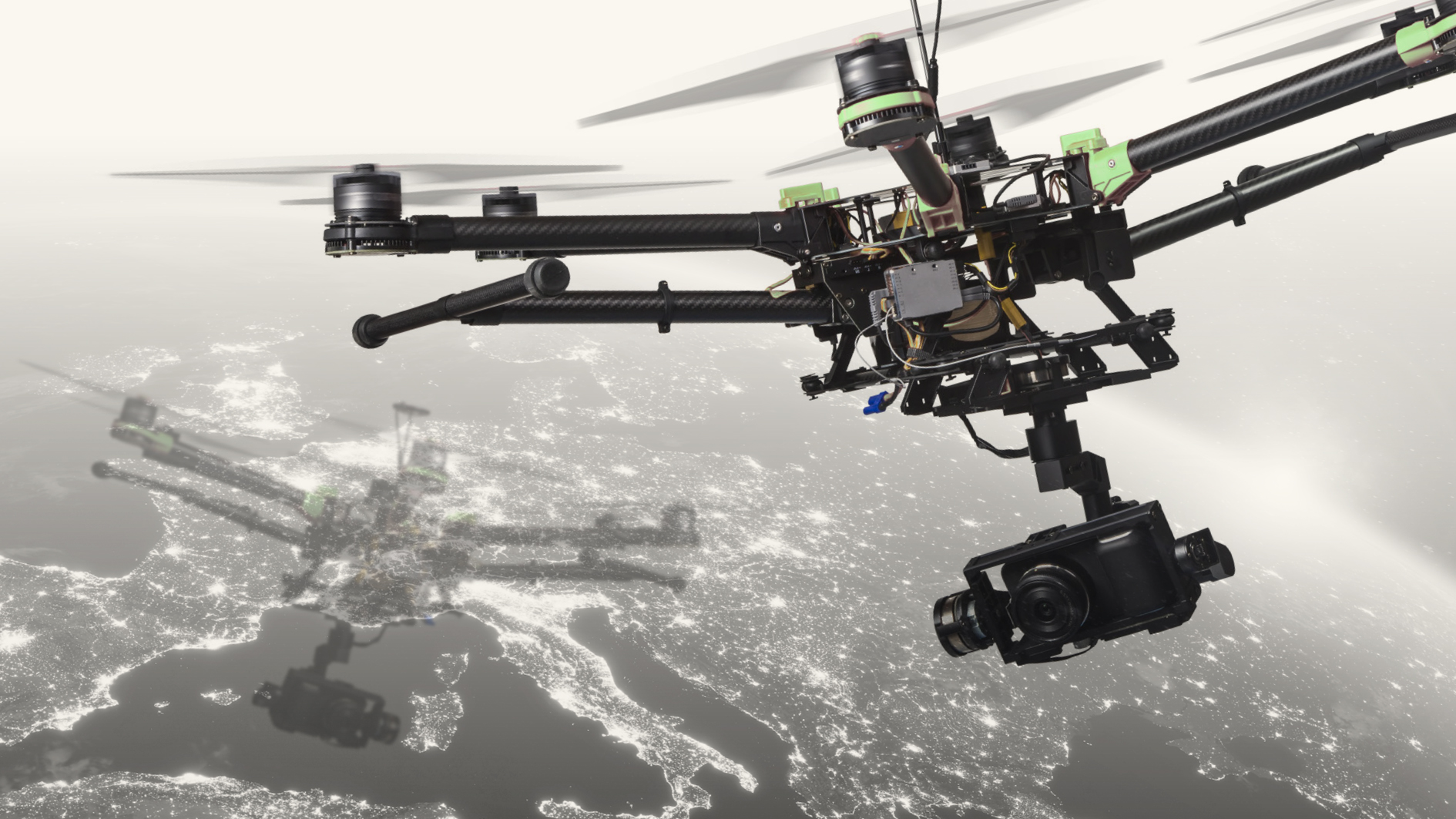
Drone warfare is one of the most important frontiers in today’s battlefields and is only going to get more so in the future. It is a fascinating subject for engineers, especially around the accelerating development cycle, but also of increasing importance for anyone involved in defence.
By Matteo Merialdo, Director, Technology & Innovation
The evolution of the modern drone
Unmanned aerial vehicles (UAVs) have come a long way since the first ‘flying bomb’, the Kettering Bug, was produced during World War I. Three decades later, in World War II, drones started being used for reconnaissance in addition to attacking. Later, the Vietnam War saw the first examples of jet-powered intelligence, surveillance and reconnaissance (ISR) drones, and by the end of the century drones were being widely used for providing situational awareness data during conflicts and as decoys. But they were still expensive to produce.
This century, however, has seen a revolution in the development and use of drones, especially since the beginning of the war in Ukraine. Now, the use of commercial drones, instead of expensive models produced by state monopolies, is widespread. These relatively cheap devices are used for reconnaissance and attacking, and as decoys. Now, almost anyone can have access to multiple powerful weapons that can provide a major difference in a battlefield scenario.
In addition, drones used for warfare are no longer limited to UAVs: we also see unmanned ground vehicles (UGVs), which can be used to transport wounded personnel, for example, and sea drones for attacks. Together with the availability of cheap UAVs, these have significantly changed modern warfare.
Drones and ISR
In military terms, ISR has always been one of the most important things in any conflict. You need to know what is happening, who is doing what and how things are changing. Satellites have helped a great deal in this context but the saturation of today’s battlefields with cheap drones is making a huge difference.
By using drones to collect and transmit large amounts of local data, it’s possible to provide high levels of situational awareness. That doesn’t mean that the country spending the most money on drones will have the advantage. Instead, it’s the one that is best at integrating their systems to gather and use that data.
Innovation cycle
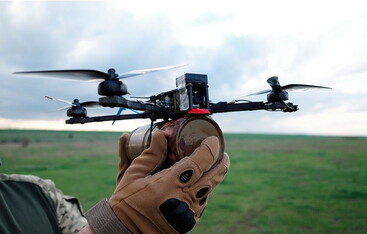
Drones are now so cheap that they are considered expendable. And with that approach, the development cycle can speed up significantly.
This is important given that electronic warfare and cyberattacks are also evolving quickly, supported by artificial intelligence (AI) and machine learning. The cycle of gathering user feedback and requirements based on performance and then providing an engineering response plus testing, has shortened from years to weeks – possibly even days.
In addition, the use of standard design drones makes it easier to customise them, such as introducing or upgrading AI to improve their autonomy.
Where next?
There are several issues around drones that will be central to their continued effectiveness in future, depending on whether you are using them for attack or ISR purposes, or aiming to defend against their use.
Better integration with command-and-control systems and with ISR will be very important, for example.
Cybersecurity is increasingly a focus, as AI models could be poisoned. When you have a very fast engineering cycle, how do you ensure everything is secure?
Then from a European perspective, how do we improve our competitiveness and make the most of the skills and experience we have that are spread across borders? How do we test faster to speed up the engineering cycle? Will digital twins provide an answer? And how to we ensure interoperability across Member States while preserving autonomy?
Join the conversation
Visitors to CYSAT 2026 can see Matteo Merialdo give a full version of his presentation on 'Lessons from Two Wars: How Ukraine and Iran Rewrote the Electronic Warfare Playbook for Unmanned Systems' on 20 May at 16:30 on the Master Stage.
Contact us to find out about our work on drones, including mitigating GNSS jamming and spoofing.